
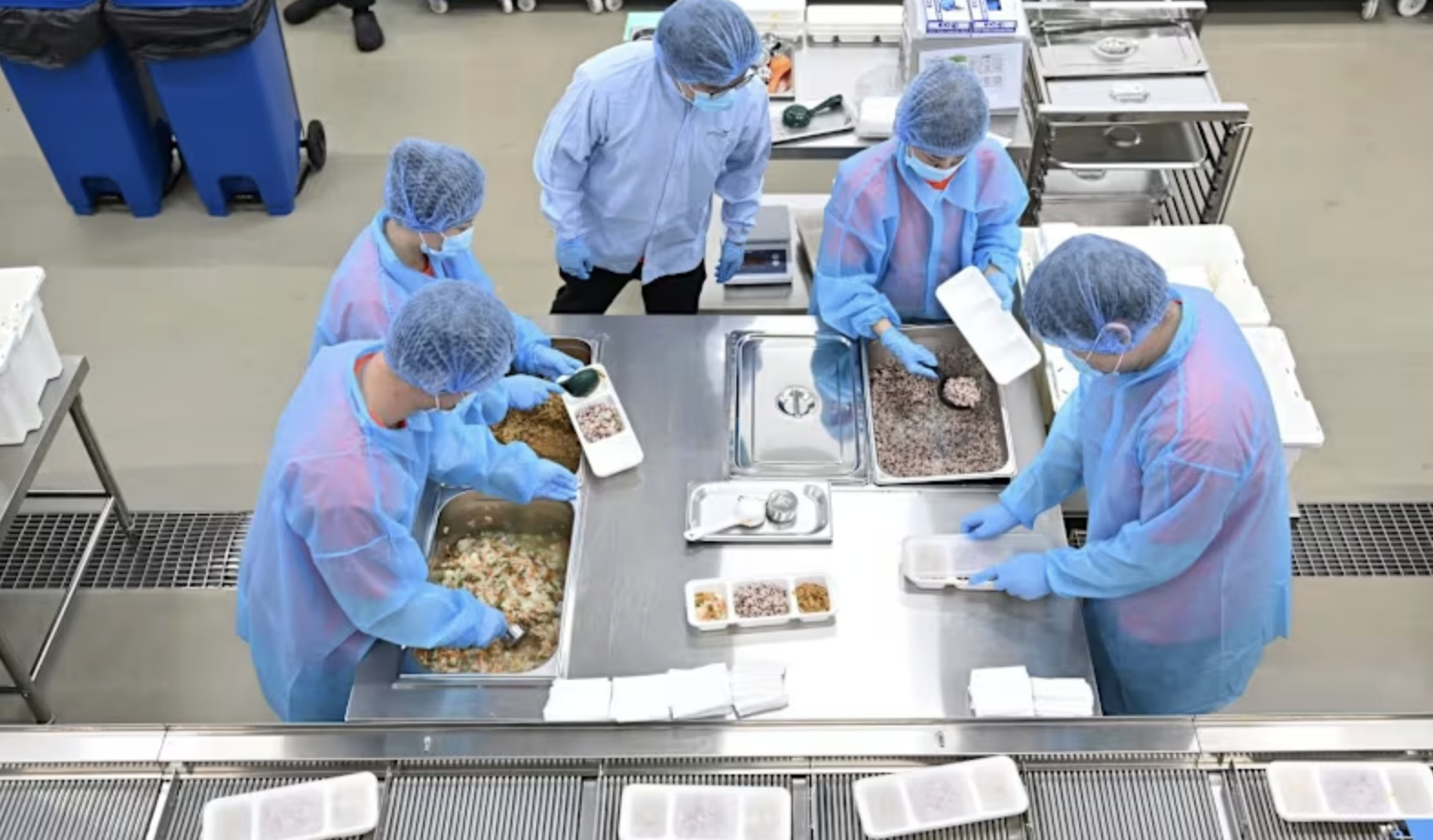
SINGAPORE — As part of a broader shift in school meal services, a new central kitchen model is being introduced at selected Singapore schools to address challenges in securing traditional canteen operators and to standardise food quality.
At Wilmar’s central kitchen facility, staff were observed preparing and packing bento-style meals for distribution to schools, reflecting the government’s push to centralise food production while maintaining nutrition standards and operational efficiency. 
The Ministry of Education (MOE) has expanded the central kitchen model from its pilot phase in 2022 to 13 schools starting January 2026. The initiative aims to tackle persistent shortages of canteen stall operators and ensure students continue to receive affordable, healthy meals throughout the school day. 
Under this model, contracted caterers including Wilmar, Chang Cheng Holdings and Gourmetz will prepare meals in central facilities and supply them to participating schools. Meals are then distributed via in-school service points, with some incorporating digital systems for pre-ordering and collection. 
Education authorities say that the new approach will help reduce waiting times during lunch, streamline food safety practices, and offer a more consistent dining experience across schools. However, the Education Ministry has noted teething issues in some early implementations, including technical glitches affecting meal ordering and distribution, which are being addressed collaboratively with schools and vendors. 
MOE emphasises that the central kitchen model is optional and will be considered for additional schools only where traditional canteen vendor recruitment remains challenging. The individual stallholder system will remain the default model for most schools.
{{ errorMessage }}
コメント 0
댓글을 입력하세요...
댓글을 작성하려면 로그인이 필요합니다.
아직 댓글이 없습니다. 첫 댓글을 작성해보세요!
News
총 69件
Planned Circle Line disruption: Station staff, shuttle buses keep peak-hour crowds under control


26.01.20 ·
105
Compassion, not compliance, must drive Singapore’s ‘we first’ movement: NVPC CEO

26.01.20 ·
82
147 North View Primary School students affected by gastroenteritis symptoms since Jan 13; most have recovered

26.01.20 ·
92
‘It’s not illegal’: How prescription drugs are filling the void left by Kpods

26.01.20 ·
89
Commentary: Jumping into 2026 and ‘I don’t know yet’ can be the most honest answer

26.01.20 ·
91
The carrom comeback: How a game from Singapore’s ‘kampung days’ is transcending generations

26.01.20 ·
85
Singapore’s former chief planner Liu Thai Ker dies aged 87 Singapore — January 18, 2026

26.01.19 ·
92
More than 220 Car Leasing Firms Closed in 2025; Some Drivers Left Stranded amid Industry Upheaval Singapore — January 19, 2026

26.01.19 ·
89
Former Vice-Principal and Executive Director Jailed for Cover-Up in Preschool Molestation Case Singapore — January 19, 2026

26.01.19 ·
100
Beverage container return scheme: NEA exploring how it can help small producers make smoother transition

26.01.16 ·
99
Hwa Chong Institution working with SATS to revise recipe, presentation of bento meals after feedback

26.01.16 ·
97
Singapore to face defending champions Vietnam in 2026 ASEAN football championship

26.01.16 ·
102
9 in 10 polytechnic graduates found work within 6 months of completing school or NS in 2025

26.01.16 ·
92
PM Wong removes Pritam Singh as Leader of the Opposition, invites Workers’ Party to nominate another MP to fill the role

26.01.16 ·
89
New chemical, biological lab opened near Changi Airport to boost Singapore’s pandemic response

26.01.16 ·
88
Inside a Central Kitchen as Some Schools Roll Out New Canteen Model

26.01.16 ·
98
More Overseas Scammers Are Using Local SIM Cards. Here’s How and What Could Happen Next

26.01.15 ·
99
Despite Singapore’s AI Push, Some Doctors Say Cost and Access Keep the Technology Out of Reach

26.01.15 ·
85
Pritam Singh’s Lying ‘Not Trivial’, Strikes at Singaporeans’ Trust in Parliament: Leader of the House Indranee Rajah

26.01.15 ·
86
3 Nominated MPs Say Pritam Singh Is Unsuitable to Continue as Leader of the Opposition

26.01.15 ·
96
댓글 작성